


About | Copyright © 2026 Budapest University of Technology and Economics
90 Years of the BME High Voltage Laboratory (1936–2026)
Nine Decades in the Service of Education, Research, and Innovation
Since its establishment in 1936, the High Voltage Laboratory of the Budapest University of Technology and Economics (BME) has played a defining role in the development of the Hungarian power industry, high-voltage engineering, and electrical engineering education. The laboratory’s history is also an important chapter in the history of Hungarian electrical engineering, where scientific achievements, industrial cooperation, and generations of academic dedication have come together.
Foundation and the Early Years
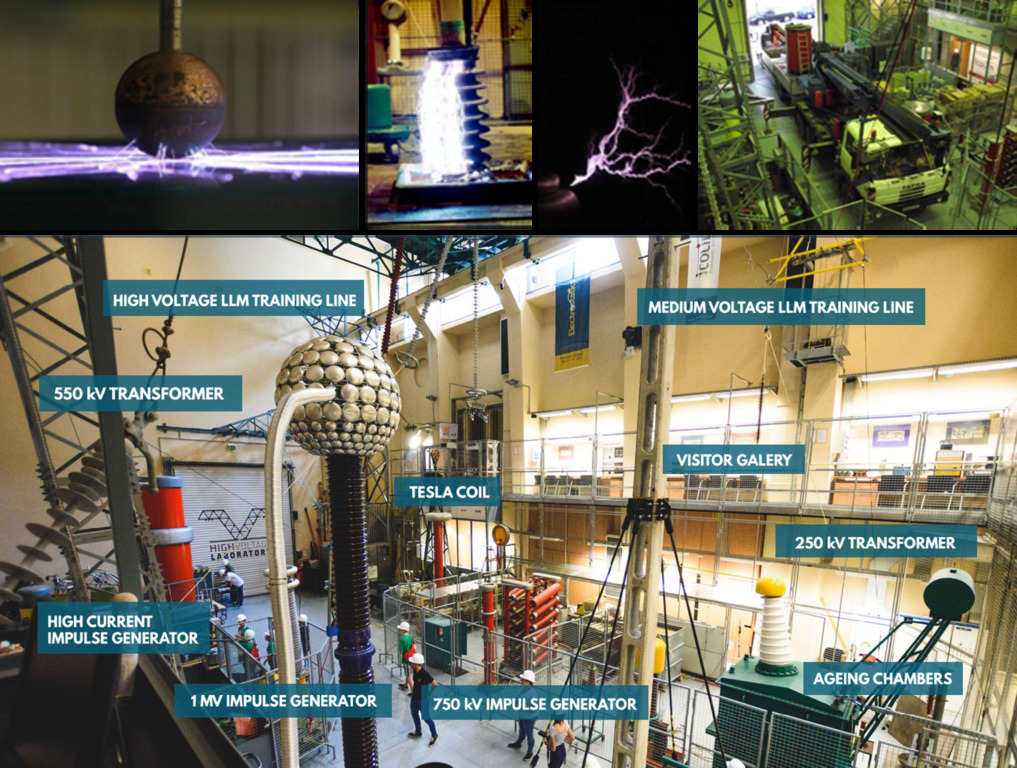
The laboratory was founded at the initiative of Professor László Verebélÿ in the 1930s in response to the rapid development of electric power systems and the growing demand for high-voltage testing. The first laboratory began operation in 1936 in the FE Building of the university, equipped with a state-of-the-art 250 kV test transformer and, later, with a 1 MV impulse generator.

The laboratory walls were painted black to facilitate the observation of corona discharges, while the acquisition of equipment was made possible through the support of several industrial companies. From the very beginning, the laboratory’s research and educational activities were closely linked to the development of the Hungarian electric power system.
War Years and Reconstruction
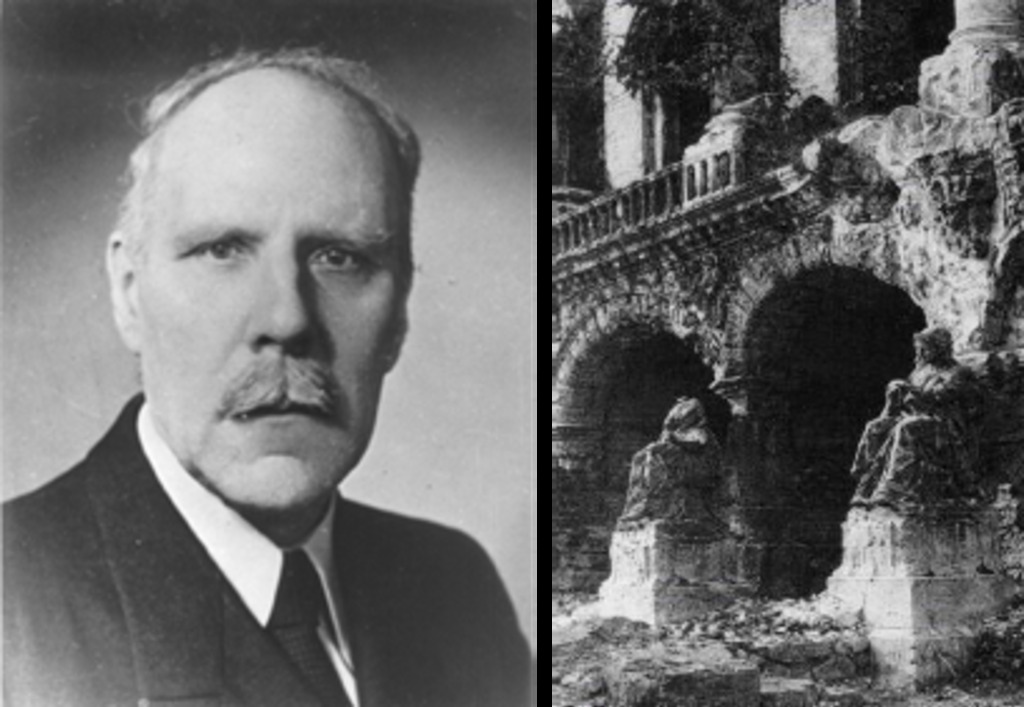
During the Second World War, the laboratory equipment faced the threat of transportation. Thanks to the determined efforts of Professor László Verebélÿ, however, the most important equipment remained at the university and survived the siege of Budapest. Following the war, teaching and research activities resumed rapidly under his leadership, ensuring that not a single academic year was omitted at the university.
The New Laboratory in Building V1
The relocation carried out between 1959 and 1961 marked the beginning of a new era in the laboratory’s history. A modern high-voltage hall was constructed next to Building V1 to meet the growing demands of education and research.
Professor János Eisler played a decisive role in the development of the new laboratory. He laid the foundations of Hungarian insulation research and established a scientific center dedicated to the non-destructive testing of insulating materials. The research school that emerged from this work achieved internationally recognized results.

International-Level Research and Development
Significant technical developments took place from the 1970s onward. The laboratory’s major facilities were expanded with a 600 kV test transformer and a 750 kV impulse generator, enabling investigations related to modern electric power systems.
Under the leadership of Professor Tibor Horváth, world-class research programs were launched in the fields of lightning protection, surge protection, and high-voltage insulation systems. Several scientific schools were established within the laboratory, including the Lightning and Surge Protection School, the Insulation Diagnostics School, the Industrial Electrostatics School, and the Live Working Safety School.
Scientific Schools |
Year of establishment |
| Lightning and Surge Protection School | 1948 |
|
Insulation Engineering School (currently Insulation Diagnostics School) |
1961 |
| Industrial Electrostatics School | 1984 |
|
Live-Line Maintenance School and Dr. Béla Csikós Educational Center |
1993 és 2011 |
Over the years, research activities expanded to include insulation diagnostics, electrostatic technologies, environmental protection, lightning research, and electrical safety engineering.
Renewal and Industrial Partnership
At the beginning of the 2000s, the laboratory faced significant challenges regarding its future operation. Hungarian energy companies, however, strongly supported the laboratory, recognizing its irreplaceable role in education, research, and professional training.
As a result, a comprehensive renovation was carried out in 2012 with the support of industrial partners. The laboratory infrastructure was modernized, measurement systems were upgraded, and new opportunities for research and education were created.
Following the renovation, Hungary’s largest Tesla transformer was commissioned in the laboratory.
The BME High Voltage Laboratory Today
Today, the laboratory serves simultaneously as an educational facility, research center, and industrial testing laboratory. Hundreds of students perform laboratory measurements here each year within undergraduate, master's, and doctoral programs, while high-voltage and insulation diagnostic tests are conducted for domestic and international industrial partners.
A particularly important role is played by the 20 kV and 400 kV live-working training facilities established within the laboratory, which support the education and qualification of professionals in the electric power industry.
Artificial intelligence, the energy transition, power system security, and sustainability present new challenges. By addressing these challenges, the BME High Voltage Laboratory continues to actively participate in international research programs and energy-sector innovation.
A Legacy of 90 Years
For nine decades, the High Voltage Laboratory has demonstrated that high-quality engineering education, scientific research, and industrial cooperation can reinforce one another to create lasting value. The laboratory’s history preserves the collective achievements of generations of professors, researchers, engineers, and students, while it continues to serve as one of Hungary’s leading centers of expertise in electrical power engineering.
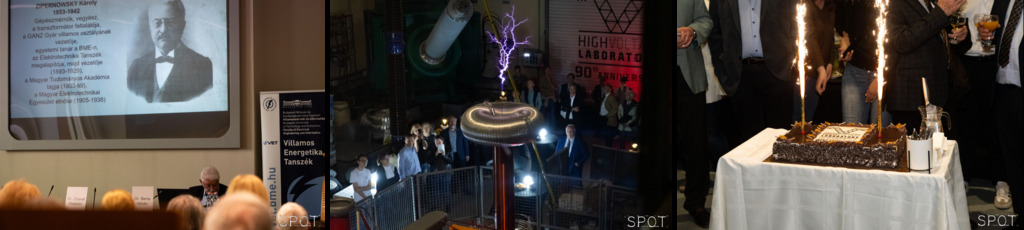
HVL90 – Related Events and Commemorative Activities
The 90th anniversary of the BME High Voltage Laboratory provides an opportunity to honor nine decades of research and development, education, and knowledge sharing that have played a significant role in the advancement of Hungarian energy engineering and electrical technology. The events, presentations, and publications organized for the jubilee aim to showcase and pass on this rich professional heritage to current and future generations of experts.
-
Jubilee Seminar – April 21, 2026
-
“HVL90 Memorial Semester” designation in the first semester of the Student Association of Energy (Energetikai Szakkollégium) during the 2026/27 academic year
-
Panel presentation within the program of the Hungarian Electrotechnical Association (MEE) Annual Conference
-
HVL90-themed pre-conference program series on Day 0 of the ISGT International Conference
-
Four-part paper series in the Hungarian Elektrotechnika magazine